
Lighting a Single Light — How a Sentence Becomes a Seed
Every generation carries a handful of sentences that guide it. Some are taught by teachers, some learned from books, and some arrive in the most unexpected ways. This is the story of one such sentence — offered once, remembered forever, and carried quietly through a life shaped by service and compassion.
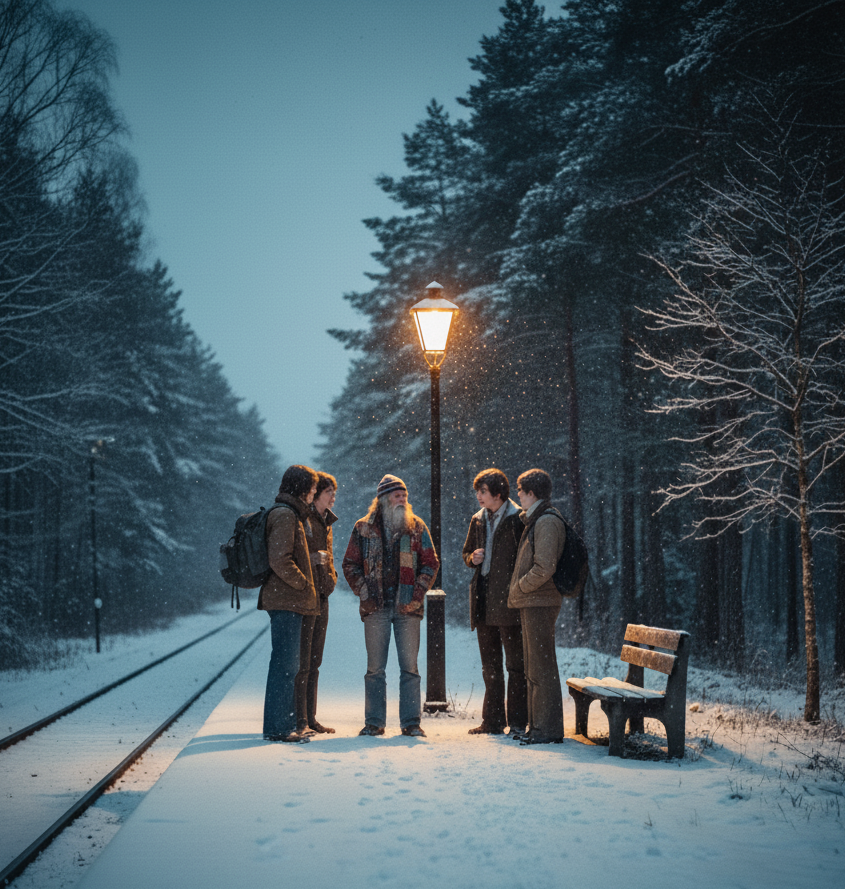
A man who had spent much of his life supporting people who had lived through war and trauma once shared, at sixteen, he did his first big trip without his parents and travelled through Sweden country with friends on an Interrail trip. At a tiny railway station – a wooden platform, a single bench, a place most trains pass without slowing — they met an aging hippie who decided, for reasons known only to him, to stop these young travellers and speak to them.
He talked for only a few minutes. But before they left, he asked them to repeat one sentence. He insisted they say it aloud — as if speaking it would somehow plant it deeper.
“It’s better to light a single light than to damn the darkness.”
– Unknown hippie, at a small Swedish train station
They left, perhaps laughed about the eccentric stranger, and continued their journey. But decades later, that sentence remained. Not as a memory of a hippie, but as a principle. A quiet compass. A seed that had taken root.
Sometimes such a sentence rests quietly for years — until life leads someone into places where darkness is not symbolic, but real. Places where even a single light, however small, may matter more than we will ever know.
Why such moments matter
This story is not remarkable because of who said the sentence. It is remarkable because someone listened. Because a group of young travellers paused long enough for a stranger’s insight to slip into their minds, unnoticed at first, and then stay there.
Wisdom often enters our lives this way: not through ceremonies or official speeches, but through brief, unplanned encounters — a conversation, a line overheard, a sentence given freely by someone we never meet again.
In that sense, the hippie did what teachers, mentors, and guides have always done: he planted a seed and trusted time to do the rest.
A lesson for today
In a world where despair is easy and outrage is rewarded, the principle behind this sentence is quietly radical: do something small, but do it. Light a light. Take responsibility for one corner of the world. Act instead of cursing. Begin instead of waiting.
The effect of such an act may be modest — a brief comfort, a conversation, a single decision made differently. Or it may grow into something none of us could have predicted: a vocation, a movement, a change in how we treat one another. But whatever follows, it starts the same way: with someone choosing to light a small light rather than sit in the dark and condemn it.
The essence
This story is not about nostalgia. It is not about Sweden, or railways, or even about the man who offered the sentence. It is about the decision to act when it would be easier to withdraw or complain. It is about the courage to light a light, however small, and to trust that it may matter more than we will ever know.
Anyone can be the one who lights a small light instead of cursing the darkness.
Even a long-forgotten hippie at a railway station in a small town in the middle of nowhere.
Start a Dialogue
Lighting a light instead of cursing the darkness can be the seed that rests quietly until the time is right. Begin a conversation with someone younger, or someone who trusts your voice. Even a brief exchange can plant a seed, a new thought, a new insight that may grow for decades.